Lichen, Algae or Moss? Identifying What Is Growing on Your Aberdeen Roof
Look up at almost any roof around Aberdeen and you will see some sort of growth taking hold. Green streaks, dark staining, spongy cushions, crusty grey blotches, they all turn up here. Most people lump it together and call it moss, but there are actually three different culprits, and they are not the same thing at all.
Knowing which one you are looking at is more useful than it sounds. Each behaves differently, affects your roof in its own way and responds to treatment differently too. This guide helps you tell moss, algae and lichen apart, explains why the north east sees so much of all three, and shows why the distinction matters when it comes to cleaning.
The quick answer: Algae shows as green or black streaks and staining, moss forms thick, spongy green cushions that sit proud of the surface, and lichen appears as flat, crusty patches in grey, white or orange. All three are common on Aberdeen roofs, and soft washing with a biocide treats them all at the root.
1. Why so much grows on Aberdeen roofs
Before naming the three, it helps to understand why the north east is such fertile ground for roof growth. Aberdeen's climate is cool, wet and windy for much of the year, with rain rolling in off the North Sea and the salt-laden haar leaving surfaces damp for long stretches. That constant moisture is exactly what these organisms need.
The city's traditional slate and granite housing plays a part too. Slate holds moisture in shaded spots, and north-facing roof slopes that see little sun stay damp far longer than sunnier aspects. Those cold, shaded, wet surfaces are the perfect home for moss, algae and lichen alike.
So if your roof seems to grow a fresh green coat faster than a friend's place down south, you are not imagining it. The local conditions genuinely encourage it, which is why regular cleaning is such a sensible habit here.
2. Algae: the green and black staining
Algae is usually the first growth to appear and the easiest to overlook early on. It shows up as a thin green film or, very commonly in Aberdeen, as dark green and black streaks running down the roof slope. Those unsightly black stains that so many homes have are almost always airborne algae.
Because algae is flat and clings tight to the surface, it does not trap water the way moss does, but it still spoils the look of a roof badly and signals that conditions are ripe for worse growth to follow. Where algae has settled, moss and lichen often are not far behind.
Have you ever seen a roof with dark tear-like streaks running down from the ridge? That is the classic look of algae, spread by rain washing spores down the slope. It is extremely common on north east roofs and one of the first things a good clean puts right.
3. Moss: the thick green cushions
Moss is the one everybody recognises. It forms those thick, spongy, bright green cushions that sit up proud of the slates, gathering especially along the lower edges, in valleys and around the joins where debris collects. In Aberdeen's damp climate it can grow surprisingly thick.
Moss is more than an eyesore. Because it holds water like a sponge, it keeps the roof surface constantly wet, and clumps that break away can block gutters and downpipes. That trapped moisture, sitting against slates through freezing winters, is what makes moss the most concerning of the three for the roof itself.
If you can see green tufts standing up from your roof when you look from the garden, that is moss. On heavily shaded or neglected Aberdeen roofs it can build into a genuinely thick blanket over just a few damp seasons.
4. Lichen: the crusty grey and orange patches
Lichen is the odd one out and the toughest to shift. Rather than soft cushions or streaks, it appears as flat, crusty, almost painted-on patches in shades of grey, white, pale green or orange. It grips the surface hard and has a leathery or scaly texture up close.
Lichen is remarkably hardy and can cling on where other growth struggles. It roots into tiny surface pits and holds fast, which is why scraping at it rarely works well and can even damage the slate. It grows slowly but is stubborn once established.
Many older Aberdeen slate roofs carry a fair bit of lichen, those pale and orange blotches you often see on weathered stone and slate. It needs a treatment that works at the root over time rather than brute force, which is where soft washing comes into its own.
5. Why the type matters for treatment
Identifying the growth matters because it shapes the right approach. Thick moss usually needs careful clearing before treatment, whereas algae and lichen are treated in place and left to break down and weather away gradually. Knowing what is there helps set proper expectations for how the roof will look afterwards.
It also explains why patience is part of the process. With lichen especially, the roof continues to improve over the weeks following a treatment as the growth dies off and the elements wash it away. A roof is not always spotless the very moment the work finishes, and that is normal.
Does it change the method dramatically? Not really, because soft washing handles all three, but it does change what a good cleaner will tell you to expect. Honest advice about timing and results comes from correctly reading what is growing up there.
6. How soft washing tackles all three
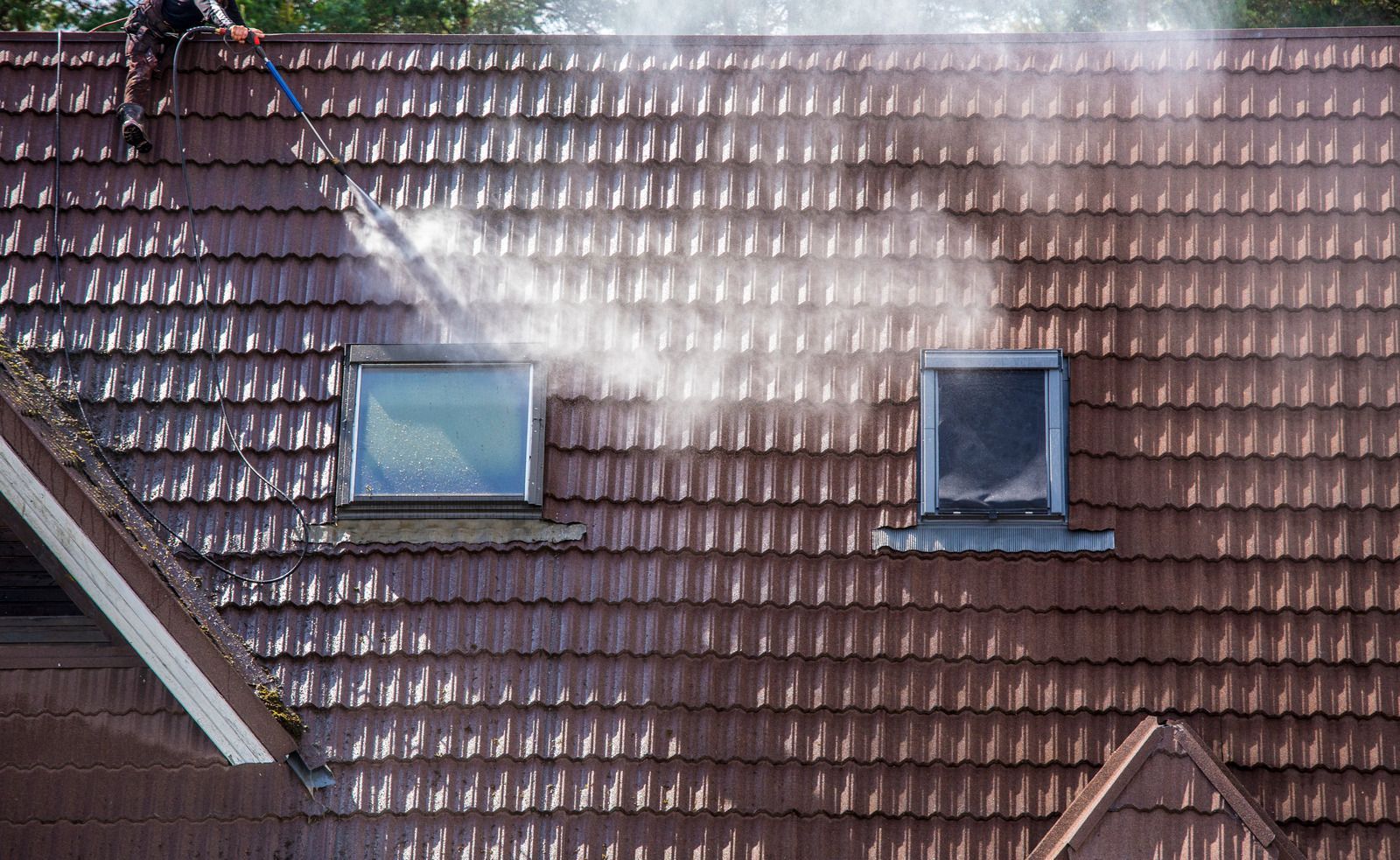
The reason soft washing suits Aberdeen roofs so well is that it deals with moss, algae and lichen together, gently. It uses low-pressure water and a biocide that treats the growth at the root, rather than high pressure that can strip and damage slate while only clearing the surface.
The biocide is the key. It keeps working after the visit, killing off spores and growth that a simple scrub would leave behind, which is why the results last far longer than a quick blast. For a roof carrying all three types of growth, that thorough, root-level action is exactly what is needed.
It is also the safest choice for the traditional slate so common across the city. Gentle on the roof, tough on the growth, and effective against every one of the three culprits at once. That combination is why we rely on it.
- Algae: green or black streaks and staining that cling flat to the surface.
- Moss: thick, spongy green cushions that trap water and can block gutters.
- Lichen: crusty, flat patches in grey, white or orange that grip the slate hard.
- Soft washing: treats all three at the root with low pressure and a biocide.
Frequently Asked Questions
Which growth is worst for my roof?
Moss tends to cause the most concern because it holds water against the surface and can block gutters. Algae and lichen mainly spoil the look, though lichen is the hardest to remove.
Are the black streaks on my roof mould?
Usually they are airborne algae rather than mould. Those dark, tear-like streaks running down the slope are one of the most common sights on Aberdeen roofs.
Can I just scrape lichen off myself?
It is not advisable. Lichen grips hard and scraping can damage slate. A biocide treatment that works at the root is far safer and more effective.
Why does my roof grow moss so quickly?
Aberdeen's damp, shaded and cool conditions are ideal for moss. North-facing slopes that get little sun stay wet longest and grow it fastest.
Will one treatment remove all three types?
Soft washing with a biocide treats moss, algae and lichen together. Some growth, lichen in particular, continues to break down and weather away over the weeks afterwards.
Not sure what is growing on your roof?
Ben's Roof Cleaning brings over 15 years of experience in safe, effective roof cleaning across Aberdeen and the surrounding area. Get in touch or call 01224 004954
for a free, no-obligation quote.
Knowing what is up there is the first step to sorting it
Whether your Aberdeen roof is streaked with algae, cushioned with moss or crusted with lichen, each tells its own story about the conditions your home faces. Recognising the difference helps you understand what your roof needs, and a proper soft wash deals with all three, leaving the slate protected and looking as it should.